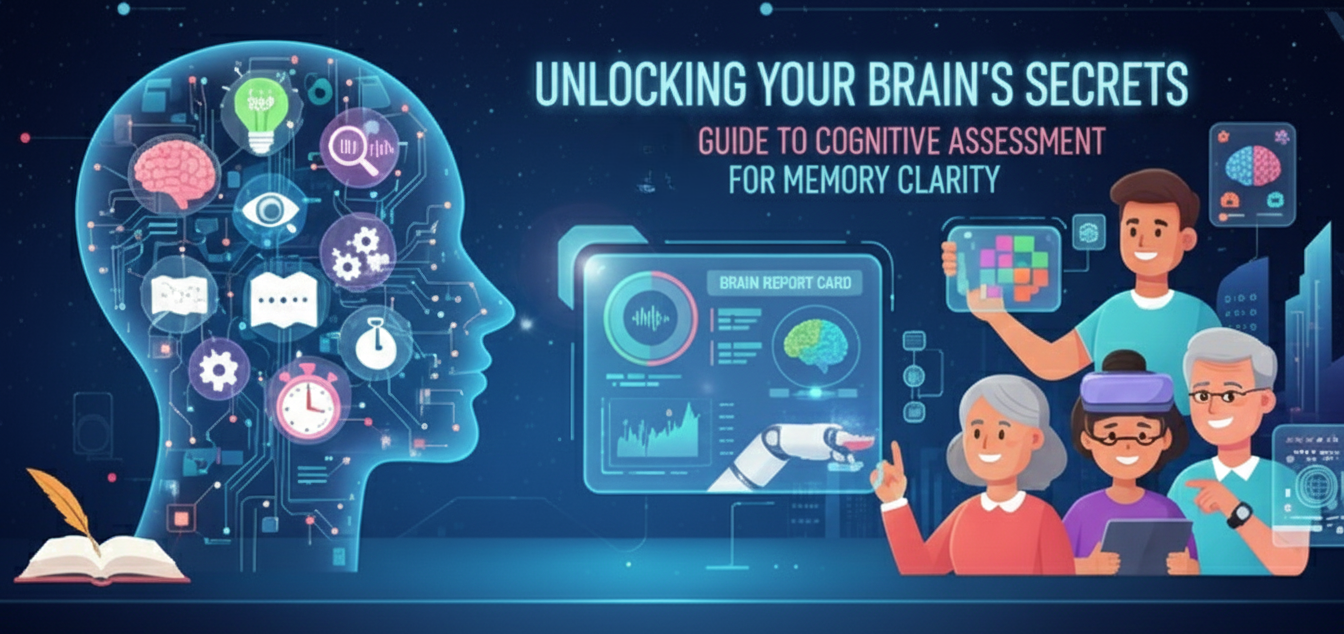
Introduction: Understanding Cognitive Assessment
A cognitive assessment helps you understand how your brain is working. You can think of it as a brain check-up. It looks at how well you remember things, focus, and solve problems. This assessment can also spot early changes in thinking. Sometimes, these changes are small and easy to miss. That is why cognitive assessment can work like an early warning system. It helps you notice problems before they get worse.
Cognitive assessment also helps you take action early. You may learn ways to protect your brain health. You may also get the right support if needed. Many people worry it is like a test. But it is not a quiz, and there is no pass or fail. The goal is to understand how your mind works. It gives helpful information, not judgement.
Components of Cognitive Assessment
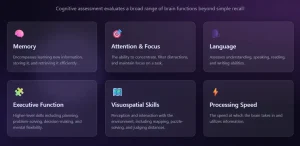
A cognitive assessment checks how well your brain works. It does more than test memory. It looks at many skills you use every day. These skills include memory, focus, language, thinking, and reaction time.
Memory is your ability to learn and remember information. It also includes using that information later. Attention and focus show how well you can concentrate. It checks if you can stay on task and ignore distractions. Language skills include speaking, reading, writing, and understanding words. The test also looks at thinking skills. These skills help you plan, solve problems, and make decisions. It may also check how well you understand space. This helps with maps, puzzles, and judging distance. Another part is processing speed. This shows how fast your brain can understand and respond.
These assessments help doctors understand brain changes. They can find early signs of memory or thinking problems. They are also helpful after a head injury. Doctors may use them to check ADHD or learning difficulties too. The results can guide a personal plan for support. This plan helps improve learning and daily life.
Historical Evolution of Cognitive Assessment
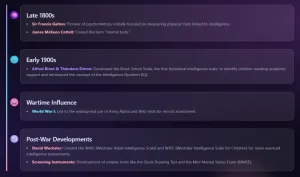
Cognitive assessment has a long history. It started in the late 1800s. Early researchers tried to measure intelligence using simple methods. Sir Francis Galton studied physical traits linked to intelligence. Later, James McKeen Cattell introduced the term “mental tests”.
In the early 1900s, Alfred Binet and Théodore Simon created the first practical intelligence test. They made it to help children who needed school support. This work later led to the idea of IQ.
During World War I, cognitive tests became more common. The military used tests like Army Alpha and Beta to assess new recruits. After the war, David Wechsler built better tests for adults and children. These tests gave more detailed results.
Over time, simpler tools were also created. Examples include the MMSE and the Clock Drawing Test. Today, cognitive assessment has advanced even more. Many tests are now digital and computer-based.
Modern Cognitive Assessment Process
Modern cognitive assessments can be short or detailed. Some are quick screeners that take only a few minutes. Examples include the MoCA, MMSE, and Mini-Cog. These tests give a fast overview of brain function. Other assessments are longer and more detailed. A full neuropsychological evaluation can take many hours and may involve more than one specialist.
The process usually starts with a conversation. The professional asks about concerns and health history. Then, the person completes simple tasks in a calm setting. These tasks check skills like memory, attention, and language. After the test, the results are carefully reviewed. The goal is to create a clear picture of the person’s cognitive strengths and challenges. Finally, the person receives feedback and helpful recommendations. This may include lifestyle changes or more testing.
These tests mainly show if there may be cognitive impairment. They do not always explain the exact cause. Stress, tiredness, and mood can also affect test performance.
Debates and Limitations of Cognitive Assessments
Most experts support cognitive assessments. They can find early signs of memory or thinking problems. This helps people plan early and get support sooner. These tests also show a fuller picture of brain function. That can help doctors choose safer and better care. Cognitive health matters at every age, so testing can help young and older people.
Still, these tests are not perfect. Some tests may be unfair for certain groups. Culture, language, education, and income can affect results. A person may score low because the test does not match their background. Another issue is real-life accuracy. A test may not show how someone thinks in daily life. Some people also fear these tests. They worry about labels or being judged. This fear can stop them from getting help. Quick screening tests also have limits. They can only show possible risk. They cannot confirm a final diagnosis. More testing is often needed.
The Future of Cognitive Assessment
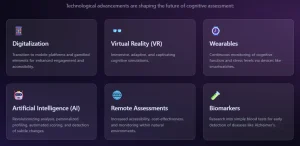
Cognitive assessment is changing because of new technology. Tests are becoming easier to take and easier to understand. Many tests are now done on phones and tablets. Some are made like games, so people feel less stressed.
Virtual reality may also be used more. It can test thinking skills in real-life situations. Smartwatches can help too. They may track stress, sleep, and brain function every day.
Artificial intelligence is also helping. It can check results faster and notice small changes early. Remote testing is growing as well. People can take tests from home. This saves time and money. In the future, blood tests may also help. Scientists are working on tests to find Alzheimer’s early.
Conclusion: Taking Action for Memory Clarity
Memory and thinking changes can feel confusing. But you do not have to ignore them. If you notice changes in your focus, memory, or problem-solving, it is a good idea to speak with a doctor. Even if you are only curious about your brain health, getting checked can give you peace of mind.
A cognitive assessment can help you understand what is happening. It shows your strengths and the areas that may need support. When you know your cognitive profile, you can make better choices for your health and daily life. You can also take steps early, before problems become bigger.
Protecting your brain health is an important part of long-term wellness. Small actions today can make a big difference later. The most important step is to start.
Book an appointment today and take control of your memory clarity.