

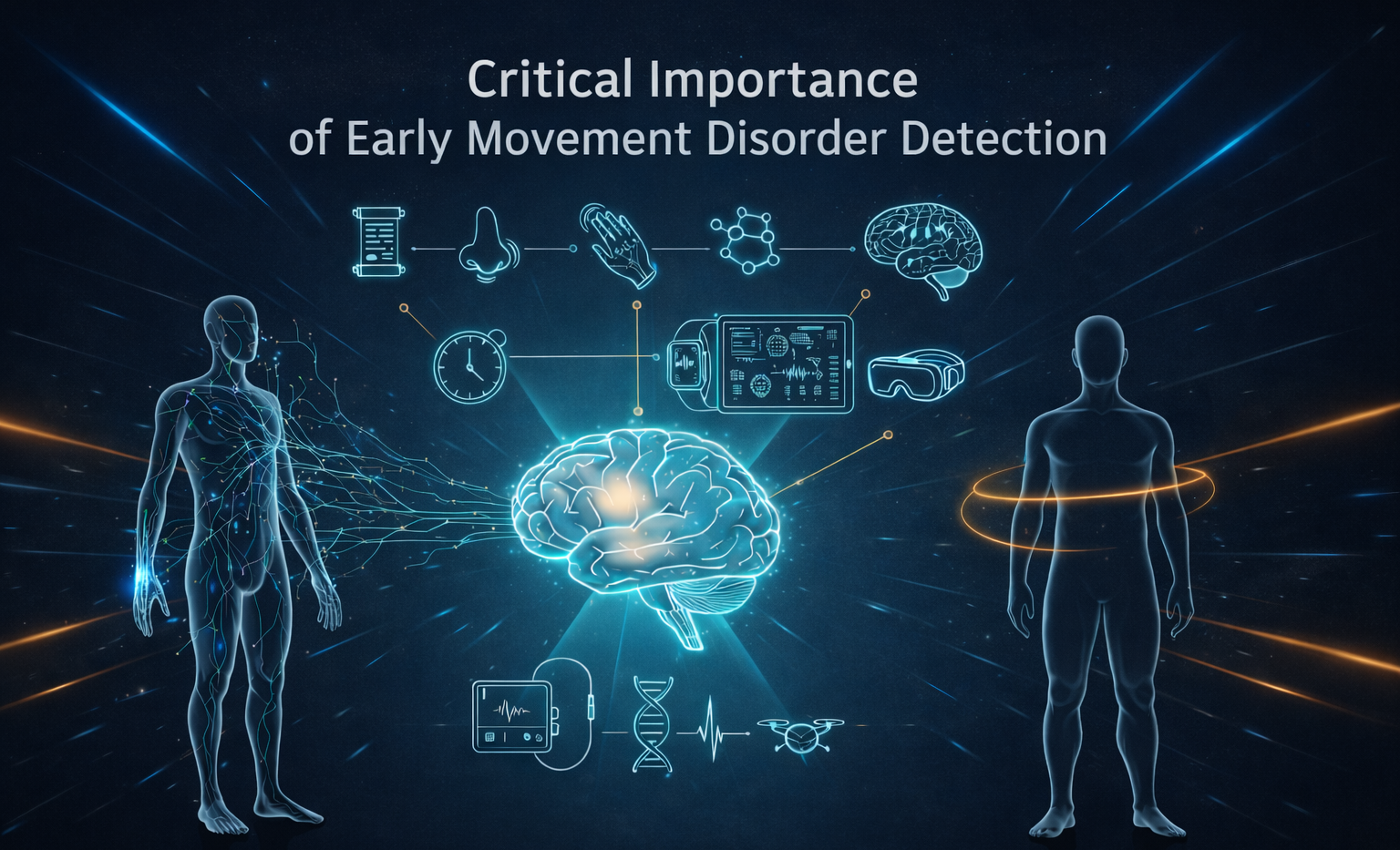
What Are Movement Disorders?
Have you ever noticed your hand shaking while holding a cup? Or felt stiff even after resting? These changes can happen for many reasons. Sometimes it is stress. Sometimes it is fatigue. But if the symptoms keep returning, it is worth checking.
A movement disorder affects how your body moves. It can cause shaking, sudden movements, stiffness, or slow movement. Some people also feel unsteady while walking. These conditions often start in brain areas that control movement and balance. Many people think only of Parkinson’s disease. But movement disorders are a large group. Some cause tight muscle twisting (dystonia). Some affect balance and coordination (ataxia). Some cause repeated movements (tics). Others, like Huntington’s disease, affect both movement and thinking over time. Knowing this helps you understand why symptoms can look different in each person.
Early Signs Can Be Easy to Miss
Most movement disorders start slowly. Early signs can be small. You may notice a slight tremor in one hand. You may feel stiffness in an arm or leg. You may also walk more slowly than before. Some people notice changes in handwriting or posture. Doctors also look at when the tremor happens. A tremor that happens while the hand is resting may point toward Parkinson’s disease. A tremor during movement may point toward essential tremor. This simple difference is a helpful early clue.
Symptoms That May Not Look Like Movement Problems
Some movement disorders begin with symptoms that are not about movement. These symptoms can appear years before tremors or stiffness begin.
For example, a person may lose their sense of smell. They may have long-term constipation. They may feel anxious or depressed without a clear reason. Some people may also act out dreams during sleep. These signs matter because they can support early Parkinson’s detection, especially when movement changes are still mild.
How Doctors Make a Diagnosis
Diagnosis can take time. Doctors often describe it as detective work. That is because early symptoms can look like other problems. Stress, aging, and some medicines can cause similar signs. A doctor usually begins with an exam. They observe how you move, walk, and balance. They may check muscle stiffness too. The doctor will also ask about your health history and family history.
Sometimes doctors use tests to rule out other causes. Blood tests may help. Brain scans may also help in some cases. A special scan can support Parkinson-like diagnosis. Some people may also need nerve and muscle tests. Not everyone needs all tests, and doctors choose based on symptoms.
Why Early Detection Matters
Early diagnosis can reduce fear and confusion. It gives clarity and helps families understand what is happening. It also gives time to plan and take steps early. Early care can also help manage symptoms sooner. It may help people stay active and independent for longer. Doctors can also treat mood changes and sleep problems early. These issues affect daily life and should not be ignored.
Early-stage patients also help research. They can join clinical trials. This helps scientists create better treatments. Many experts believe early stages may be the best time for future therapies that protect brain cells.
What You Can Do Now (While Waiting for a Doctor Visit)
If you are worried but not yet diagnosed, you can still take steps. These steps do not replace medical care. But they help you feel more in control. Start by tracking your symptoms. Write down when they happen and how long they last. Note what makes them better or worse. If possible, record short videos of tremors or walking changes. This can help the doctor see your symptoms clearly.
You can also support your health. Aim for good sleep, steady movement, and stress control. Light exercise like walking and stretching can help mood and movement. Try to reduce caffeine if it makes shaking worse. Drink enough water each day.
What to Expect at the Doctor (So You Feel Prepared)
Many people feel nervous about a movement check. But the process is usually simple. Your doctor may ask when symptoms started. They may ask if symptoms are getting worse. They may ask about family history too. You may also be asked to do small tasks like walking, tapping fingers, writing, or balancing. These tasks help the doctor understand how your body moves.
Before your visit, bring your symptom notes. Bring a list of medicines you take. If you recorded videos, bring those too. This makes the visit easier and more helpful.
Conclusion: Every Moment Matters
Movement disorders often begin with small signs. That is why early awareness matters. If you notice shaking, stiffness, slow movement, or balance changes, talk to a doctor. If you also have sleep or mood changes, mention those too. These signs can help doctors understand what is happening.
Even before diagnosis, you can take simple steps. Track your symptoms. Support your health. And use trusted resources. Early action can lead to better care and better support.