

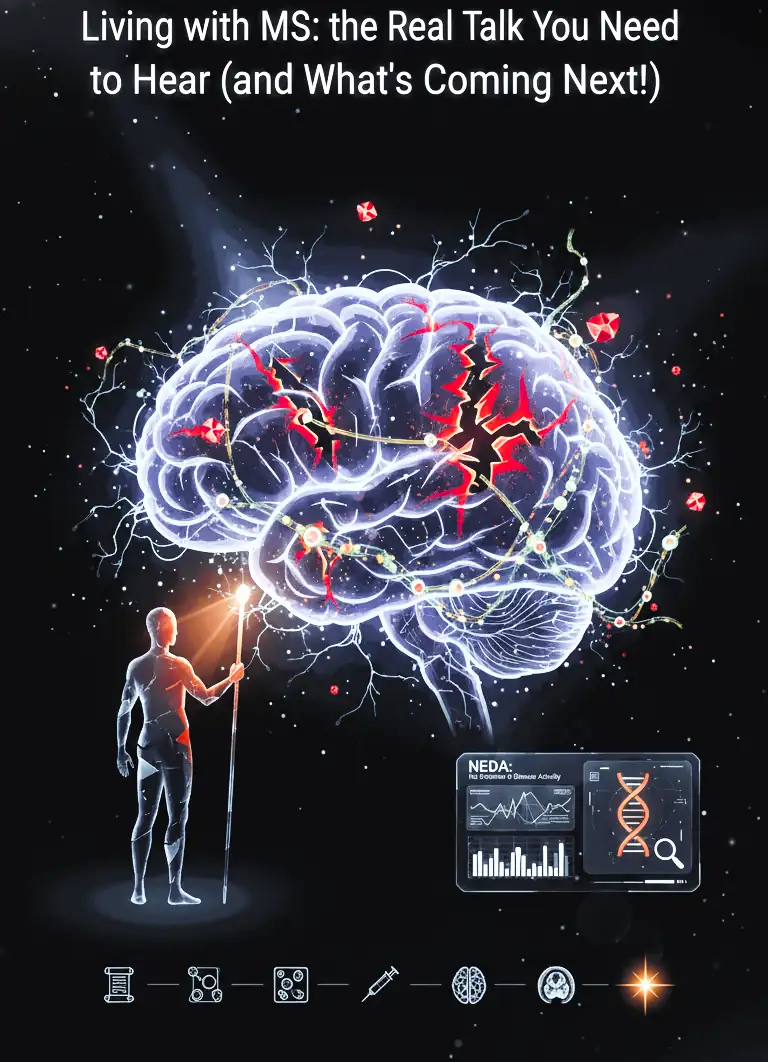
Insights from the Front Line of MS Research
Many people believe that multiple sclerosis (MS) only affects young adults. This is not always true. MS can be diagnosed later in life. Some people receive their diagnosis after the age of 45 or even 50. If this is your experience, or that of someone you love, it is natural to have questions and concerns.
Will treatment still work? Is it too late to start medication?
To address these concerns, experts like Dr. Sarmad Al-Araji, a leading clinical neurology researcher at UCL, are reshaping how we understand multiple sclerosis. His research looks at how different patients respond to treatment. This work challenges long-standing beliefs about age and MS and brings new hope to people of all ages.
The Myth of the “Age Barrier”
For many years, doctors believed that MS treatments were less effective in older adults. The thinking was that MS changes over time and becomes less driven by inflammation. Because of this, some thought treatment was less useful later in life.
The truth:
Research led by Dr Al-Araji shows that age alone should not decide treatment. Even when MS looks different later in life, many patients still benefit from modern MS therapies.
Strong Treatments Are Not Just for the Young
Doctors were once cautious about giving powerful MS treatments to older patients. These treatments include medicines like Ocrelizumab and Natalizumab.
The truth:
Dr Al-Araji’s research shows that treatment results are often similar in both younger and older patients. This includes fewer relapses and slower disability progression. Age at diagnosis does not mean a person should receive weaker treatment if stronger options are needed.
Moving Toward Personalized MS Care
MS treatment is no longer about one solution for everyone. Research is now focused on personalized care. This means choosing treatment based on the person, not just their age.
The truth:
Living well with MS depends on finding the right treatment at the right time. By joining clinical studies and patient registries, people with MS are helping researchers like Dr Al-Araji improve future care. This work helps doctors better predict which treatments will work best for each individual.
Research Spotlight: The Queen Square Study and Beyond
Dr. Sarmad Al-Araji is a researcher in clinical neurology. He has a PhD from UCL. He works at University Hospitals Coventry and Warwickshire. His research looks at multiple sclerosis in later life. He studies how MS treatments work at different ages.
Key Research: Late-Onset Relapsing-Remitting MS
In a major study published in Neurology in 2025, Dr Sarmad Al-Araji and his research team studied people with Late-Onset Relapsing-Remitting MS (LO-RRMS). This refers to MS diagnosed later in life.
What the Study Found
Over a two-year period, the researchers found:
- Similar relapse rates in older and younger patients
- No major differences in MRI activity
- No clear difference in disability progression
What This Means
Age alone should not guide MS treatment decisions.
People diagnosed later in life can benefit just as much from modern MS therapies. High-efficacy treatments remain important, regardless of age.
Selected Research by Dr Sarmad Al-Araji
Dr Sarmad Al-Araji has published several important studies that support personalized MS care:
- MS Treatment in Later Life
Effectiveness of disease-modifying therapies in late-onset relapsing-remitting MS
(Neurology, 2025) - Personalized Treatment Planning
Predicting the best treatment response for each individual with MS (POINT-MS study)
(BMJ Open, 2025) - Real-World Treatment Comparison
Comparing high-efficacy and standard MS therapies in everyday clinical care
(Annals of Clinical and Translational Neurology, 2025) - Advanced Brain Imaging in MS
Understanding brain changes and their role in MS progression
(Brain Communications, 2025)
Book an Appointment with Dr Sarmad Al-Araji
If you are seeking expert care for multiple sclerosis, neuroinflammation, or general neurological concerns, Dr Sarmad Al-Araji provides comprehensive diagnostic and management plans tailored to your specific needs.